
Business
Why Renting a Skid Steer Beats Buying for Most Job Sites

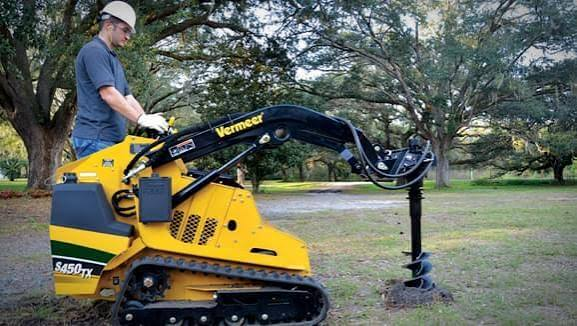
Construction and landscaping crews face the same dilemma every season: buy expensive equipment that sits idle half the year, or find a flexible alternative that matches real project demands. For busy contractors and property owners alike, equipment rental has become the smarter, more cost-effective path forward.
Skid steers are some of the most versatile machines on any job site. They dig, grade, lift, clear, and haul, making them indispensable for projects ranging from backyard landscaping to full-scale commercial builds. But owning one outright comes with a hefty price tag, ongoing maintenance costs, and storage headaches that many businesses simply don’t need.
That’s where Rio Rental Partners comes in. We help contractors, landscapers, and property owners access reliable, well-maintained equipment exactly when they need it, without the long-term financial commitment of ownership.
What Makes a Skid Steer So Valuable on the Job Site?
Skid steers earn their reputation through sheer adaptability. A single machine can switch between buckets, forks, augers, and grapples, handling multiple tasks without requiring a fleet of specialized equipment.
Their compact size allows them to maneuver through tight spaces that larger machinery simply can’t reach, including narrow backyards, cramped urban lots, and indoor demolition sites. Despite their small footprint, skid steers deliver impressive power, capable of lifting thousands of pounds and tackling tough ground conditions with ease.
Contractors appreciate how quickly a skid steer can switch between attachments, cutting downtime between tasks and keeping project timelines on track. This flexibility translates directly into labor savings, since one operator can complete work that might otherwise require several different machines and crew members.
How Does Equipment Rental Save Contractors Money?
Purchasing heavy equipment outright means absorbing depreciation, insurance, maintenance, and storage costs year-round, even during slow seasons when the machine isn’t in use. Renting eliminates that financial burden entirely.
Choose equipment rental if your project needs change frequently or if you want to avoid tying up capital in depreciating assets. This approach makes particular sense for seasonal businesses, smaller contractors, and property owners tackling one-time projects like driveway grading or land clearing.
Rental also means access to newer, better-maintained machines without the responsibility of repairs falling on your shoulders. When equipment breaks down mid-project, every hour of downtime costs money. Rio Rental Partners keeps its fleet in top condition, so crews spend less time troubleshooting machinery and more time finishing the job.
There’s also a tax advantage worth considering. Rental expenses are often fully deductible as a business operating cost in the year they’re incurred, while purchased equipment typically must be depreciated over several years. For many small and mid-sized businesses, that immediate deduction makes a meaningful difference to the bottom line.
What Should You Look for in an Equipment Rental Partner?
Not all rental companies deliver the same level of service, and choosing the right partner can make or break a project timeline. A few factors separate the good providers from the great ones.
Reliability tops the list. Equipment that shows up on schedule and functions properly from day one keeps projects moving without costly delays. Maintenance history matters just as much. Well-serviced machines run more efficiently and break down less often, which directly affects how much work gets done in a single rental period.
Flexibility also plays a major role. Projects rarely go exactly as planned, so a rental partner who offers adjustable rental periods and responsive customer support can save contractors from unnecessary stress when timelines shift.
Finally, consider the breadth of available attachments and equipment options. A provider with a diverse inventory allows crews to adapt quickly if project scope changes, without needing to switch vendors mid-job.
Why Rio Rental Partners Is Built for Contractors Who Need Results
Rio Rental Partners understands that every job site has unique demands. Our inventory includes a wide range of attachments designed to handle grading, digging, lifting, and clearing tasks across residential, commercial, and agricultural projects.
Every machine in our fleet undergoes regular maintenance checks before it reaches a job site, reducing the risk of unexpected downtime. Our team works directly with customers to recommend the right equipment and attachments for their specific project, rather than leaving them to guess which machine will get the job done.
A powerful, versatile machine built to tackle digging, grading, and lifting on any job site is what you’ll find with our Skid Steer Rental service. Whether you’re clearing land for a new build, regrading a sloped yard, or managing material on a tight urban site, our team matches you with equipment that fits the scope and scale of your project.
We also pride ourselves on transparent pricing and flexible rental terms, because we know project timelines can shift without warning. Customers working with Rio Rental Partners gain access to responsive support, well-maintained machinery, and a team genuinely invested in helping their project succeed.
Ready to Move Your Project Forward?
Heavy equipment shouldn’t be a barrier to getting work done efficiently. By choosing rental over ownership, contractors and property owners gain access to reliable, well-maintained machines without the long-term costs and commitments that come with buying outright.
Rio Rental Partners makes that process simple. From selecting the right attachments to ensuring equipment arrives ready to perform, our team is focused on helping your project stay on schedule and within budget.
Reach out to Rio Rental Partners today to discuss your upcoming project and find the right equipment solution for your job site.


One submits a splendid, defensible bid and wins a worthwhile system. The other sends in a rushed, short bid, and each loses the project or wins it at a margin that quietly bleeds out through the use of the usage of manner of month six. Talent with the useful resource of itself now does not offer a purpose for the gap, and neither does success. The distinction lives in behavior, statistics, gear, and the manner a collection treats the instances earlier of at the same time as a bid is due. This article breaks the most effective variations down so you can diploma your very very personal operation in competition to them truly.
Same Drawings, Different Outcomes
Average companies cope with estimating as a reactive, in the long run, data-driven challenge: accumulate plans, rely on the bid, add markup, and skip it on.
High performers address it as a danger-pricing task. Their question is not “What does this fee?” but “Where want to this variety be wrong, and via how an entire lot?”
They take a look at the project earlier, then they document it.
Strong estimators spend the primary hour with specs, cutting-edge-day, each-day situations, and addenda, not with a takeoff device. Hidden requirements, which encompass liquidated damages, phasing limits, union pointers, or owner-supplieddevices,e live in the one net web page. Average companies skim them, then meet them all over again as change orders.
They write down what they do no longer understand now.
Every task has gaps: dubious information, lacking sections, conflicting sheets. Top estimators log each hole as a proper assumption or an RFI. That listing becomes a protecting layer of the bid, and it offers the estimating manager a head begin due to the truth the truth of the agreement is received.
Habits That Show Up Before the Takeoff Starts
The process is wherein the most vital separation takes vicinity. Most bidding errors are not math mistakes. They are collection mistakes, together with pricing before the scope is settled or reviewing after the deadline has already eaten up the time. Contractors comparing Construction Estimating Services NYC companies, or evaluating their private in-house company, want to have a check of the manner in which the workflow is disciplined earlier than searching out how rapid it is.
The table below contrasts the 2 approaches:
| Focus Area | Average Bidding Team | High-Performing Team |
| Bid/No-Bid Decision | Bids on almost everything | Scores each project against capability, client, and margin |
| Scope Review | Skims specs | Builds a scope checklist by trade |
| Takeoff Method | Ad hoc, estimator preference | Standard templates and naming rules |
| Quote Handling | Takes lowest price | Levels prices and checks for gaps |
| Review Process | One look-through by the same person | Independent second assessment before release |
| Post-Bid Learning | Rarely revisited | Win/loss debrief and price feedback from the field |
Selective bidding is an ability.
Chasing each invitation spreads accurate estimators thin and lowers remarkable in the path of the board. High-performing groups decline paintings that don’t upload fee and position the saved hours into jobs they’ll win.
Standard templates beat heroic.
Templates eliminate alternatives that do not want to be made times. Heroics also can save an unbid; however, systems maintain the complete 3 hundred and sixty-5 days.
Cost Data That Stays Alive
Every estimator has a database; but no longer is every database alive. In commonplace agencies, unit expenses come from a spreadsheet, with years in the past wiped smooth, with a few numbers overwritten in a hurry and in no manner recorded. Feedback from the area closes the loop.
The most valuable fee statistics come from completed duties. If the estimate assumed 38 difficult portray hours regular with unit of formwork and the company burnedforty-sixx, a person wants to understand why. High performers maintain quick assessment schooling with mission managers and superintendents after closeout, and the findings move alongside the float once more into the database.
Quotes need leveling, not simply gathering.
Two subcontractor numbers are not comparable till their inclusions are. One can also furthermore exclude hoisting, safety, or finding out. Skilled estimators deliver together a leveling sheet that suggests every hole in greenbacks, so the very last bid offers the real rate of the scope in choice to the nicest-searching price.
Technology That Earns Its License Fee
Software isn’t always an opportunity preference to judgment; however, it multiplies accurate judgment. The hollow amongst organizations isn’t often about who owns extra licenses. It is ready for those who have related their device into one go with the go with the flow: takeoff, costing, concept, and a feedback loop into the subsequent technique.
From virtual takeoff to model-based absolute quantities
Digital takeoff removed a super little bit of the manual counting that produced silent errors. The next step is pulling portions properly away from a coordinated 3-d version. On complex jobs with heavy mechanical and electrical coordination, getting proper access to BIM Modeling Services permits estimators to take a look at quantities in competition to struggle-unfastened geometry and be aware of layout conflicts at the same time, as there may be even time to charge them well. It does not replace a professional estimator. It gives that estimator higher raw cloth.
Automation wants to do away with clerical work, no longer wondering.
Good businesses automate repetitive steps together with exporting quantities, formatting proposals, and updating fee lists. They do not automate judgment calls like productivity assumptions, threat allowances, or subcontractor desire. Be careful of any device that hides its not unusual reveal. If an estimator can’t offer a purpose for the way quite various got here from, it desires to now not bypass proper into a bid.
Numbers That Prove Performance
What gets measured gets improved; however, many bidding businesses focus on one hassle: how many bids they obtained. Win rate is dishonest, due to the reality that a collection can win often through underpricing. To show how a deeper look can steer outcomes, here is an illustrative chart based on common organization styles (figures are approximate and meant for assessment, not as posted benchmarks):
| Review Depth Level | Visual Representation | Variance (%) |
| No 2nd Evaluation | ████████████████████████████ | ±12% |
| Informal Peer Appearance | ████████████████████ | ±9% |
| Structured Checklist | ██████████████ | ±6% |
| Independent Complete Evaluation | ████████ | ±4% |
The sample is apparent: every added layer of checking narrows the funnel. Teams that accumulate the lowest on the chart do not have better specific fortune. They have better structures.
Building Capacity Without Building Overhead
Growth creates a painful problem. When bid invites double, you may overload your human beings or rent estimators, and you also won’t be able to keep an ordinary tempo. Many contractors remedy this by choosing to Outsource Construction Estimator help for short durations while retaining their core business focused on approach, purchaser touch, and final pricing options.
What to preserve in-house and what to outsource
Keep bid/no-bid alternatives, markup approach, and risk approval inner in your employer employer. Share takeoff-heavy, time-consuming obligations that encompass quantity takeoffs, possibility programs, and quote evaluation. This reduce-up protects your aggressive trouble on the same time as easing the workload.
Five Questions Bidding Teams Ask
1. How correct has to an aggressive bid estimate be?
It is based upon drawing completeness.
2. Is a moderate win rate constantly a superb sign?
No. A business company corporation can win almost the whole lot with the useful aid of pricing too low. Pair win fee with margin fade and estimate-to-actual variance. If you win frequently but income shrinks after award, the hassle is within the numbers, not in the income attempt.
3. What is the fastest manner to enhance estimating first rate?
Start with modifications, upload an independent evaluation step, and feed real project expenses back into your database. Both rate little and pay off on each subsequent bid.
Final Thoughts
High-performing estimators aren’t magicians. They are disciplined in small subjects: reading the specs first, recording assumptions, leveling charges, updating charge facts, nd insisting on a 2nd look. Average agencies commonly recognize the one-step process too; however, cut-off dates and dependency push them aside. Closing the distance no longer requires a big rate range. It requires a preference to deal with estimating as a central earnings feature in preference to placing the undertaking paintings earlier than the real paintings start off. Pick one inclined element from this article, repair it this month, and degree the give-up result in your next 5 bids.
A towering oak doesn’t fall overnight. Long before a trunk splits or a canopy thins to nothing, the tree is usually sending signals — discolored leaves, peeling bark, strange fungal growths at the base. Most homeowners miss these clues simply because they don’t know what to look for. By the time the damage becomes obvious, the tree is often too far gone to save.
That’s the frustrating part about tree disease. It’s rarely sudden. It’s slow, quiet, and easy to dismiss as “just a rough season.” A few yellow leaves get blamed on drought. A soft spot on the bark gets written off as old age. Meanwhile, the underlying infection keeps spreading, weakening root systems and compromising structural integrity until removal becomes the only option left.
This guide breaks down the warning signs every property owner should know, the most common diseases affecting residential trees, and why professional intervention matters more than DIY fixes. Whether you’re dealing with a single sick maple or managing an entire row of aging elms, understanding how disease progresses is the first step toward protecting your landscape.
What Are the Early Warning Signs of a Sick Tree?
Trees rarely show one dramatic symptom. Instead, disease tends to reveal itself through a combination of smaller changes that build over weeks or months.
Keep an eye out for:
- Discolored or wilting leaves that appear out of season, especially yellowing or browning that starts at the edges and spreads inward
- Cankers or sunken lesions on the trunk or branches, often with cracked or oozing bark
- Fungal growth, including mushrooms or conks at the base of the trunk, which can signal internal decay
- Premature leaf drop, particularly when it happens in spring or early summer rather than fall
- Dieback in the upper canopy, where branches at the top of the tree lose leaves first and stop producing new growth
- Unusual bark texture, such as peeling, cracking, or oozing sap in patterns that weren’t there the previous year
Any one of these symptoms alone might not mean much. But when two or three show up together, it’s usually a sign that something more serious is happening beneath the surface.
What Are the Most Common Tree Diseases Homeowners Deal With?
Different species are vulnerable to different pathogens, but a handful of diseases show up again and again in residential landscapes.
Oak wilt spreads rapidly through root systems and beetle activity, and it can kill a healthy oak within weeks of the first symptoms appearing. Dutch elm disease works similarly, clogging a tree’s vascular system until it can no longer transport water and nutrients. Fire blight targets apple, pear, and other ornamental fruit trees, causing branches to look scorched even though no fire was involved. Root rot, often caused by overwatering or poor drainage, attacks silently underground long before any above-ground symptoms appear.
Fungal diseases like anthracnose and powdery mildew are less likely to kill a tree outright but can weaken it significantly over several seasons, making it more vulnerable to pests, storms, and secondary infections.
The common thread across all of these conditions is timing. Diseases caught in their early stages are far easier — and far less expensive — to treat than infections that have already spread through the trunk or root system.
Why Does Professional Treatment Work Better Than DIY Solutions?
It’s tempting to grab a store-bought fungicide and hope for the best. But most tree diseases require more than a surface-level spray to actually resolve.
Accurate diagnosis is the first hurdle. Many diseases produce overlapping symptoms, and treating the wrong condition wastes time while the real problem continues to spread. A professional arborist can identify the specific pathogen involved and recommend treatment calibrated to that exact issue, whether that means trunk injections, soil treatments, targeted pruning, or a combination of all three.
Timing also matters enormously. Certain treatments only work during specific windows in a tree’s growth cycle. Apply a fungicide at the wrong time of year, and it may do almost nothing. Professionals track these seasonal windows closely, which is part of why trained treatment tends to produce dramatically better outcomes than guesswork.
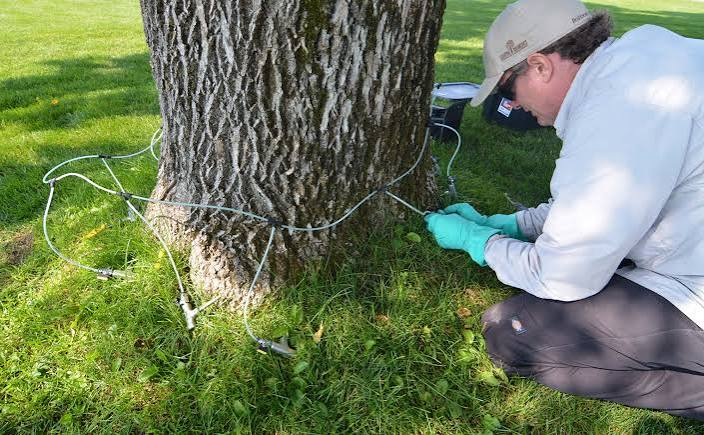
There’s also the matter of equipment and access. Treating a disease that has reached the upper canopy or deep root zone often requires tools and techniques that go beyond what’s available at a hardware store. Deep root injections, for example, deliver treatment directly to the vascular system in a way that topical sprays simply can’t match.
How Arborwright Tree Care Protects Your Trees for the Long Term
Tree disease treatment that catches problems early can save your favorite trees from decline, restore their vitality, and protect your property’s value for years to come — and that’s exactly the approach Arborwright Tree Care brings to every property it serves. The team starts with a full diagnostic assessment, examining everything from soil conditions to bark texture to pinpoint the exact pathogen at work before recommending a single treatment.
From there, Arborwright Tree Care builds a tailored plan based on the tree’s species, the severity of the infection, and the specific conditions of the property. That might mean systemic fungicide injections for oak wilt, targeted pruning to remove infected limbs before fire blight spreads further, or soil amendments designed to restore a healthy root environment after prolonged overwatering.
What sets this approach apart is the follow-through. Disease treatment isn’t a one-visit fix. Arborwright Tree Care schedules follow-up assessments to monitor how each tree responds, adjusting the treatment plan as needed until the tree shows clear signs of recovery. For homeowners who’ve already lost one tree to a preventable disease, that ongoing attention makes all the difference.
Protecting Your Trees Starts With Paying Attention
A healthy tree adds shade, value, and character to a property for decades. A neglected one can become a safety hazard in a single storm. The difference often comes down to how early a problem gets caught and how quickly it gets addressed.
If something looks off with a tree in the yard — a few too many yellow leaves, a patch of unusual bark, a mushroom growing where one shouldn’t be — it’s worth getting a professional opinion sooner rather than later. Reach out to Arborwright Tree Care for an assessment before a treatable issue turns into a tree that can’t be saved.

Running out of fuel at the wrong moment can bring an entire operation to a halt. Construction crews sit idle, delivery trucks miss their windows, and generators fail exactly when they’re needed most. For businesses that depend on a steady fuel supply, these interruptions aren’t just inconvenient—they’re expensive.
That’s why so many companies are rethinking how they source and manage fuel. Instead of sending employees to gas stations or juggling unreliable suppliers, they’re turning to a dedicated delivery service that brings fuel directly to their site, on their schedule, in the quantities they actually need.
Fuel Logic has built its entire business around solving this exact problem. By combining reliable logistics with a deep understanding of what commercial operations require, the company has become a trusted partner for businesses across industries that simply can’t afford to run dry.
This post breaks down what this type of service involves, who benefits most from it, and why it’s quickly becoming the standard for smart fuel management.
What Does a Fuel Delivery Service Actually Involve?
At its core, this service means fuel is delivered straight to your location—whether that’s a job site, a warehouse, a fleet yard, or a remote facility—instead of requiring your team to go pick it up.
Fuel Logic coordinates deliveries of diesel, gasoline, and other fuel types using specialized tanker trucks equipped to handle large volumes safely. Orders can be scheduled in advance for predictable, recurring needs, or requested on short notice when something unexpected comes up.
The process typically includes:
- Volume flexibility: Orders are sized to match actual usage, from a few hundred gallons to tank truck quantities.
- Scheduled or on-demand delivery: Businesses can set up recurring drop-offs or call for emergency service when supply runs low.
- Site-specific logistics: Drivers are trained to navigate construction sites, remote locations, and tight urban spaces.
- Compliance and safety: Deliveries follow strict safety and environmental regulations, reducing liability for the business receiving the fuel.
Which Industries Rely on This the Most?
Fuel delivery isn’t a one-size-fits-all service. Different industries have very different demands, and Fuel Logic tailors its approach based on how and where fuel is actually used.
Construction and Heavy Equipment
Job sites often lack easy access to fuel stations, and equipment downtime costs money every hour it sits unused. Scheduled fuel drops keep excavators, generators, and other heavy machinery running without forcing crews to leave the site.
Transportation and Logistics Fleets
Trucking companies and delivery fleets depend on consistent fuel access to hit tight schedules. Rather than routing drivers to fuel stops that eat into productive hours, fleet managers can arrange direct delivery to depots or staging areas.
Agriculture
Farms often operate across large areas with equipment that needs fuel during critical planting and harvest windows. On-site delivery means tractors and irrigation systems stay fueled without pulling labor away from fieldwork.
Emergency and Backup Power
Hospitals, data centers, and other facilities that rely on backup generators need guaranteed fuel access, especially during storms or grid outages. A dependable delivery partner ensures these systems are never caught without fuel when it matters most.
Why Convenience Alone Isn’t the Full Story
It’s easy to assume the main appeal here is simply saving a trip to the pump, but the real value runs deeper than that.
Reliable bulk fuel delivery eliminates the operational guesswork that comes with managing fuel stock manually. Instead of tracking fuel levels across multiple pieces of equipment or vehicles and hoping supply lines don’t break down, businesses can set up consistent delivery schedules that match their actual consumption patterns. This reduces the risk of running low during critical periods and frees up staff time that would otherwise go toward fuel runs.
There’s also a cost dimension worth considering. Buying in larger quantities often comes with better pricing than frequent small purchases at retail stations. Over months and years, that difference adds up, especially for businesses with fleets or heavy equipment that consume fuel daily.
Safety is another factor that often gets overlooked. Storing and transporting fuel incorrectly creates real risk, both for employees and for the business’s regulatory standing. Working with a provider that understands fuel handling regulations shifts that responsibility to people trained specifically for it.
How Fuel Logic Approaches Delivery Differently
Not every fuel provider treats commercial clients the same way. Fuel Logic has structured its service around flexibility and responsiveness, recognizing that no two businesses have identical fuel needs.
The company works with clients to build delivery schedules around actual usage rather than forcing a generic one-size-fits-all plan. For businesses with fluctuating demand, such as seasonal agricultural operations or construction projects with shifting timelines, this adaptability matters.
Fuel Logic also prioritizes transparency in pricing, so businesses aren’t surprised by hidden fees or inconsistent rates from one delivery to the next. Combined with a responsive customer service team, this approach has helped the company build long-term relationships with clients who need fuel they can count on.
Choosing the Right Fuel Partner for Your Business
If your operation experiences any of the following, it’s worth evaluating how a dedicated fuel delivery provider could help:
- Frequent equipment downtime due to fuel shortages
- Staff time lost to manual fuel runs
- Difficulty predicting fuel costs month to month
- Backup power systems that can’t afford to run dry
- Remote or hard-to-access job sites
Choose a provider with proven safety compliance and flexible scheduling if consistent uptime matters more than finding the absolute lowest price per gallon. On the other hand, if your fuel needs are minimal and predictable, a simpler retail arrangement might still make sense.
For businesses juggling multiple sites, tight deadlines, or equipment that simply can’t stop running, the calculation usually favors a dedicated delivery partner.
Keep Your Operations Running Without the Fuel Guesswork
Fuel shortages shouldn’t be the reason a project stalls or a fleet falls behind schedule. By partnering with a provider like Fuel Logic, businesses gain predictable access to fuel, reduce the burden on internal staff, and cut down on the risks tied to manual fuel management.
If your business is ready to stop worrying about fuel logistics and start focusing on the work that actually matters, reach out to Fuel Logic today to discuss a delivery plan built around your operation.
Frequently Asked Questions
How quickly can fuel delivery be arranged in an emergency?
Fuel Logic offers on-demand delivery options for businesses facing unexpected shortages, with response times designed to minimize downtime.
What types of fuel can be delivered?
Diesel and gasoline are among the most commonly delivered fuel types, with options tailored to the equipment and vehicles a business operates.
Is there a minimum order size for delivery?
Order sizes are flexible and based on each client’s needs, ranging from smaller top-off amounts to large-volume tanker deliveries.
How does pricing compare to retail fuel stations?
Bulk purchasing often results in better per-gallon pricing than frequent retail purchases, particularly for businesses with consistent fuel demand.

What Separates High-Performing Construction Estimators From Average Bidding Teams?

How Medicaid Can Help Your Child Access Life-Changing ABA Therapy

Why Your Roof Deserves More Attention Than You’re Giving It

Meet Lisa Ann Mudd, Sydney Sweeney’s Mother and Former Attorney

Jason Lawson: The Story of Hayley Mills’ Son

Nina Weiss: All You Need to Know About Manuel Neuer’s Ex-Wife
-
 News3 months ago
Meet Lisa Ann Mudd, Sydney Sweeney’s Mother and Former Attorney
-
 Celebrity4 months ago
Jason Lawson: The Story of Hayley Mills’ Son
-
 Celebrity4 months ago
Nina Weiss: All You Need to Know About Manuel Neuer’s Ex-Wife
-

 Celebrity4 months ago
Sandra Davenport: The Untold Story of Jim Belushi’s First Marriage
-

 News3 months ago
Who Is Rebecca Dyer? Meet David Foster’s Ex-Wife
-

 Biographies3 months ago
Who is Thomas Earle? All About Alix Earle’s Father
-

 Celebrity4 months ago
Jack Scarborough: Everything About Joe Scarborough’s Son
-

 Celebrity4 months ago
Debra Rodman: Inside the Life of Dennis Rodman’s Powerful Sister